FintechZoom.com Bitcoin Wallet: A Complete Guide to Bitcoin Storage and Security
A Bitcoin wallet is an important tool for anyone who wants to manage Bitcoin safely. The wallet does not physically store Bitcoin. Bitcoin remains recorded on the blockchain while the wallet manages the private keys that provide access to the funds.
The keyword FintechZoom.com Bitcoin Wallet is often used by people searching for information about Bitcoin storage. It is important to understand what a Bitcoin wallet does before choosing any wallet service. Users should also verify that a wallet product is offered by the official company before entering personal information or transferring funds.
What Is a Bitcoin Wallet?
A Bitcoin wallet is software or hardware that manages the cryptographic keys connected to Bitcoin. These keys allow users to receive Bitcoin and authorize transactions.
A wallet normally provides a Bitcoin address for receiving funds. The private key gives control over spending those funds. Anyone who gains access to the private key may be able to move the associated Bitcoin.
This is why wallet security is one of the most important parts of Bitcoin ownership.
How a Bitcoin Wallet Works
Bitcoin wallets interact with the Bitcoin network through addresses and cryptographic keys. When someone sends Bitcoin to your wallet the transaction is recorded on the blockchain.
The wallet helps you view your balance and create transactions. The private key is used to authorize a transaction before it is broadcast to the Bitcoin network.
The Bitcoin itself does not sit inside the wallet application. The wallet provides access to the Bitcoin recorded on the blockchain.
FintechZoom.com Bitcoin Wallet and Wallet Research
People searching for FintechZoom.com Bitcoin Wallet may be looking for information about Bitcoin wallet options. Financial websites can help readers understand wallet categories and security practices.
However users should carefully distinguish between educational content and an actual wallet product. A website mentioning a Bitcoin wallet does not automatically mean that the website operates its own wallet service.
Before downloading an application or sending Bitcoin users should confirm the official website and verify the product details. This simple step can reduce the risk of interacting with an impersonation website.
Types of Bitcoin Wallets
Bitcoin wallets are available in several forms. Each type has different advantages and security considerations.
Hot Wallets
A hot wallet is connected to the internet. Mobile wallets and desktop wallets are common examples.
Hot wallets are convenient for regular Bitcoin transactions. They can be useful when users need quick access to their funds.
Internet connectivity can also increase exposure to online threats. Bitcoin security guidance recommends keeping only limited amounts in wallets used for everyday spending.
Cold Wallets
A cold wallet keeps private keys offline. Hardware wallets are a common example.
Cold storage can provide stronger protection against online attacks because the private keys are not continuously connected to the internet. It is often considered more suitable for Bitcoin savings that do not need frequent access.
Mobile Wallets
Mobile wallets operate on smartphones. They provide convenient access to Bitcoin while allowing users to manage transactions from almost anywhere.
Mobile wallets should be protected with a strong device password. Users should also keep their recovery information secure.
Desktop Wallets
Desktop wallets run on computers. They can provide users with greater control over their Bitcoin keys.
The security of a desktop wallet depends partly on the security of the computer. Malware can create serious risks if the device becomes compromised.
Hardware Wallets
Hardware wallets are physical devices designed to protect private keys. They can keep sensitive information isolated from many online threats.
Hardware wallets can be a practical option for users who hold Bitcoin for longer periods. Users should purchase hardware wallets through trusted sources because counterfeit devices can create security risks.
What Is a Bitcoin Recovery Phrase?
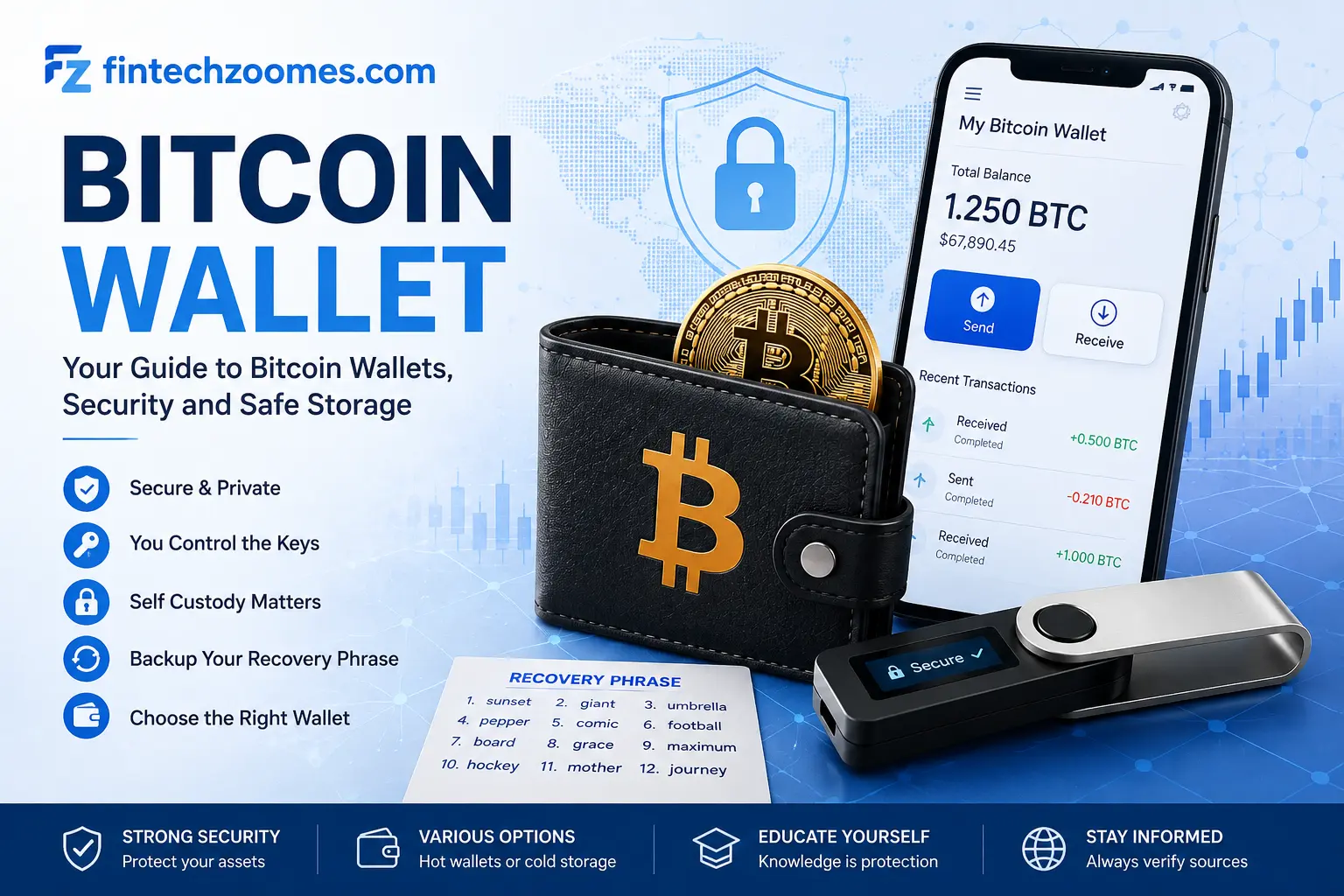
A recovery phrase is a sequence of words that can be used to restore a wallet. It is sometimes called a seed phrase.
The recovery phrase is extremely sensitive information. Anyone who obtains it may gain access to the wallet. Official Bitcoin guidance recommends keeping recovery information private and secure.
A recovery phrase should never be shared with another person. It should not be entered into an unknown website or sent through email or messaging applications.
How to Protect a Bitcoin Wallet
Bitcoin wallet security starts with protecting the private keys and recovery information.
Use a strong password for the wallet when a password is supported. Keep wallet software updated. Store backups in secure locations. Consider offline storage for long-term Bitcoin holdings.
Users should also be careful with online services that hold Bitcoin on their behalf. When another company controls the private keys the user depends on that company to protect the funds.
Common Bitcoin Wallet Scams
Bitcoin users should remain alert when searching for wallet services online. Scammers can create websites that imitate legitimate financial brands.
Fake wallet applications can attempt to steal passwords or recovery phrases. Phishing websites can also make users believe that they are accessing an official service.
Bitcoin transactions are generally irreversible. This means users should verify the receiving address and transaction details before sending funds. Bitcoin security guidance also states that legitimate support teams should never request a seed phrase or private key.
Self Custody and Third Party Custody
Bitcoin users can choose between self custody and third party custody.
With self custody the user controls the private keys. This provides direct control over the funds but also creates personal responsibility for wallet security.
With third party custody another company manages the keys. This can make access easier for some users but it introduces dependence on the custodian.
The United States Securities and Exchange Commission Investor Bulletin explains that self custody gives users control over private keys while also making users responsible for protecting those keys.
Bitcoin Wallet Security Checklist
A secure Bitcoin wallet strategy should include several basic practices.
Use a strong password when available. Keep recovery information offline. Never share a private key. Never share a seed phrase. Download wallet software only from trusted sources. Verify wallet addresses before sending Bitcoin. Keep software updated. Use additional authentication when supported.
These practices can reduce common security risks but they cannot eliminate every possible threat.
How to Choose a Bitcoin Wallet
The best Bitcoin wallet depends on how you plan to use Bitcoin.
Someone who makes frequent small transactions may prefer a convenient hot wallet. Someone who holds Bitcoin as a long-term asset may prefer cold storage.
Security should remain a major consideration regardless of the wallet type. Users should research the wallet provider and understand how recovery works before depositing funds.
A wallet should also provide clear information about fees supported features backup methods and security controls.
Why Bitcoin Wallet Security Matters
Bitcoin gives users greater control over digital assets. That control also creates responsibility.
Traditional financial institutions may provide certain account recovery services. Bitcoin self custody generally does not provide the same type of recovery system. If private keys or recovery information are permanently lost the funds may become inaccessible.
This makes backup planning an essential part of Bitcoin ownership.
FintechZoom.com Bitcoin Wallet: Final Thoughts
The FintechZoom.com Bitcoin Wallet keyword is useful for people researching Bitcoin wallet options and digital asset security. A Bitcoin wallet provides access to funds recorded on the blockchain rather than physically storing the Bitcoin itself.
The most important part of choosing a wallet is understanding who controls the private keys. Users should also understand how recovery works and how their funds are protected.
Before using any wallet service users should verify that they are visiting the legitimate website. They should never provide a seed phrase or private key to another person or website.
Bitcoin can provide direct control over digital assets. Safe wallet management is therefore an essential part of responsible Bitcoin ownership.