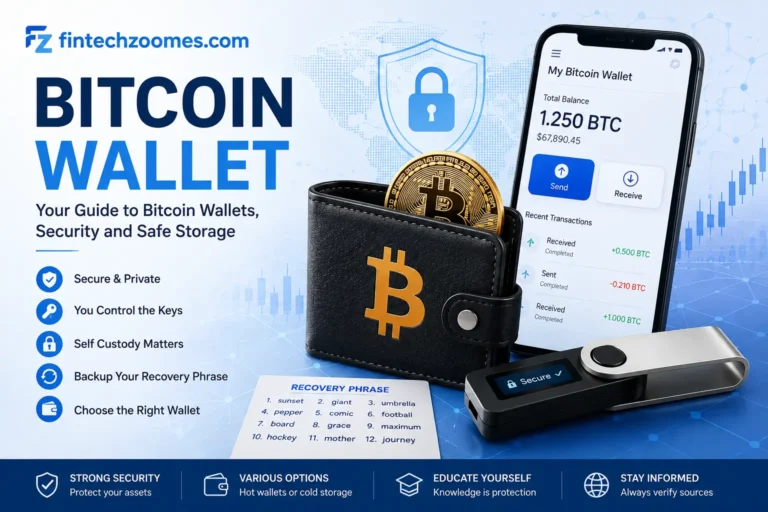
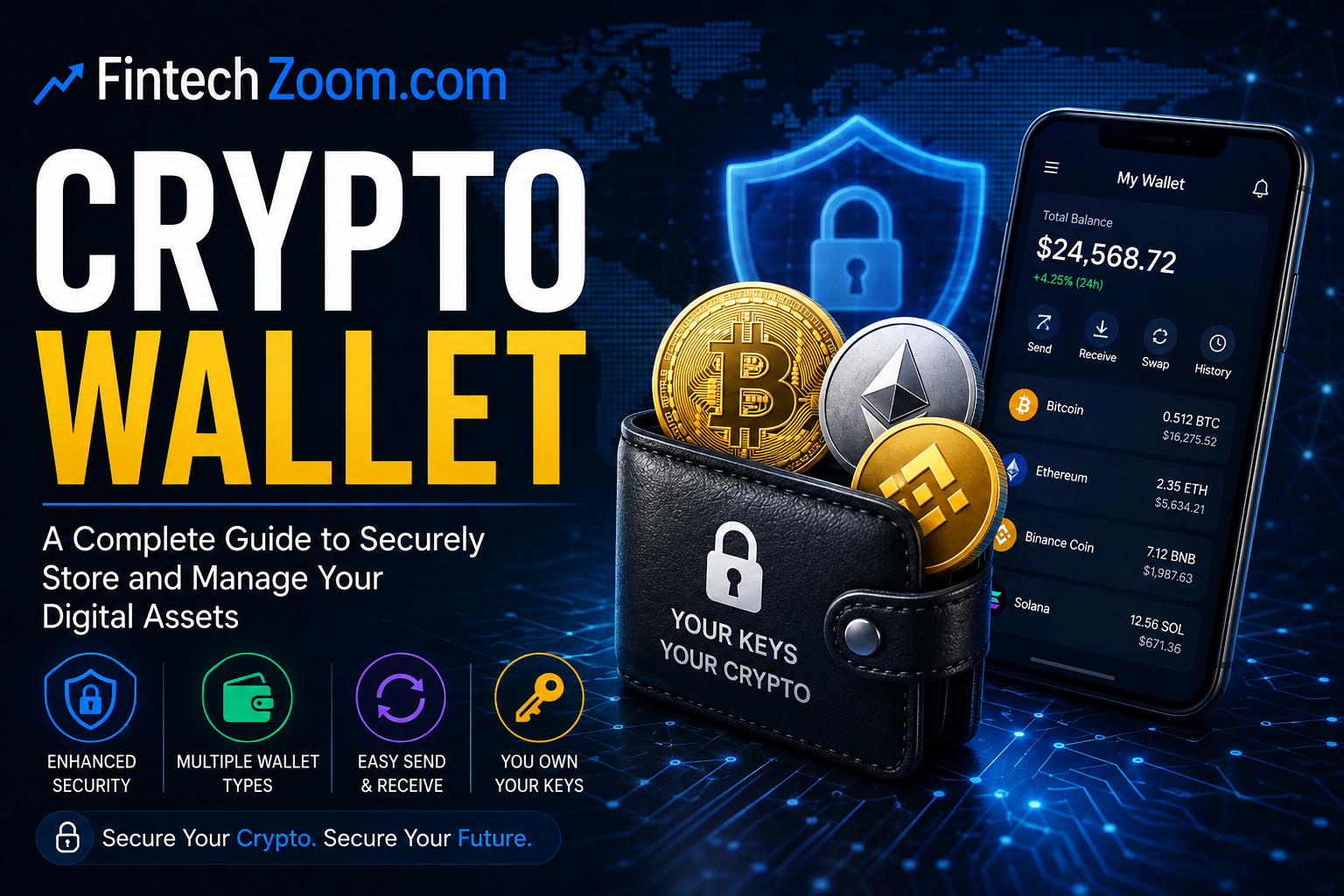
FintechZoom.com Crypto Wallet: A Complete Guide
Cryptocurrency has changed the way people think about owning and transferring money. Unlike traditional bank accounts where a financial institution manages access to funds a crypto user can take direct control of digital assets through a cryptocurrency wallet. This makes wallet security one of the most important parts of using Bitcoin Ethereum and other digital currencies.
The FintechZoom.com Crypto Wallet topic is especially useful for people who are researching different ways to manage their digital assets. FintechZoom.com publishes cryptocurrency content that covers wallet options security and broader crypto market developments. Its wallet coverage includes discussions about hot wallets cold wallets self-custody and the security practices users should understand before choosing a wallet.
One important point is worth understanding from the beginning. A crypto wallet does not work like a traditional physical wallet. Your cryptocurrency is recorded on a blockchain. The wallet gives you the tools and cryptographic credentials needed to access and manage those assets.
What Is a Crypto Wallet?
A crypto wallet is a software application hardware device or other system that allows users to manage cryptocurrency addresses and authorize transactions. The wallet works with cryptographic keys that prove ownership and allow transactions to be signed.
A public wallet address can be shared with someone who wants to send you cryptocurrency. Your private key must remain confidential because it is connected to control over your assets.
This difference is important for beginners. Your wallet does not simply contain coins in the same way a physical wallet contains cash. The blockchain records ownership while the wallet provides the interface and credentials needed to interact with those blockchain assets.
FintechZoom’s cryptocurrency coverage also explains the relationship between public keys and private keys. Public information can be used to receive funds while private credentials must be protected carefully.
How Does a Crypto Wallet Work?
When you create a wallet the software or hardware generates cryptographic information that allows you to interact with a blockchain. Depending on the wallet you choose you may receive a recovery phrase that can be used to restore access.
When you want to receive cryptocurrency you provide your wallet address to the sender. When you want to send cryptocurrency the wallet creates and signs a transaction using the necessary private credentials.
The transaction is then submitted to the appropriate blockchain network. Network participants process the transaction according to that blockchain’s rules.
This process happens without the wallet physically storing coins inside the application. The wallet acts as the access point for managing blockchain-based assets.
Hot Wallets and Cold Wallets
One of the first decisions a crypto user needs to make is whether a hot wallet or cold wallet is more appropriate.
A hot wallet is connected to the internet. Mobile wallets desktop applications and browser-based wallets generally fall into this category. They are convenient because users can quickly access their assets and interact with decentralized applications.
The downside is that an internet-connected wallet can have greater exposure to online threats. Malware phishing attacks malicious websites and compromised devices can all create security risks.
A cold wallet keeps the relevant private credentials offline when they are not being used. Hardware wallets are a common example. They are generally preferred by users who want to keep significant holdings away from an internet-connected environment.
Neither option is automatically perfect for every situation. A person who makes frequent transactions may value convenience while someone holding cryptocurrency for a long period may place greater emphasis on offline security.
What Is a Self-Custody Wallet?
Self-custody means that the user controls the private keys rather than relying entirely on a third party.
This provides a major advantage because the user has direct control over the assets. It also creates a major responsibility.
If you control your own wallet you are responsible for protecting the recovery phrase private keys and device access. Losing the necessary recovery information can make it extremely difficult or impossible to regain access.
FintechZoom’s crypto coverage distinguishes between hosted wallets and self-custody wallets. Hosted wallets can be easier for beginners because another service manages some aspects of access. Self-custody provides greater control but requires stronger personal security practices.
Why Wallet Security Matters
Security should be the first consideration when choosing a crypto wallet.
Cryptocurrency transactions are generally irreversible once they have been confirmed by the network. If funds are sent to the wrong address or stolen through a compromised wallet there may be no traditional bank process that can simply reverse the transaction.
This makes basic security habits extremely important.
Users should protect their recovery phrase and private keys. They should avoid entering sensitive information into unknown websites and should verify wallet addresses before approving transactions.
Two-factor authentication can provide an additional layer of protection for services that support it. Strong passwords and device security are also important.
The most important rule is simple: never give your private key or recovery phrase to another person.
What Is a Recovery Phrase?
A recovery phrase is a sequence of words used by many self-custody wallets as a backup method.
If your phone is lost or your wallet application becomes inaccessible the recovery phrase may allow you to restore the wallet on another compatible device.
Because this phrase can provide access to your wallet it should be treated as highly sensitive information.
It should not be stored in an unprotected cloud document or sent through messaging apps. Taking a screenshot can also create unnecessary security exposure if the image is automatically synchronized to another device.
Many users choose to write the phrase down and store it somewhere secure where it can be protected from unauthorized access and physical damage.
How to Choose the Right Crypto Wallet
There is no single wallet that is ideal for everyone. The right choice depends on how you use cryptocurrency and how much responsibility you want to manage yourself.
A beginner who makes small frequent transactions may prefer a simple mobile wallet. Someone holding substantial cryptocurrency for the long term may prefer a hardware wallet.
Before choosing a wallet consider its security reputation supported networks backup system user experience transaction controls and compatibility with the assets you actually own.
It is also important to download wallet software only from an authentic source. Fake wallet applications can be designed to steal private information or redirect transactions.
Crypto Wallets for Beginners
A beginner does not need to start with a complicated setup.
The first step is learning how wallet addresses private keys and recovery phrases work. Once these concepts are clear it becomes easier to understand the differences between custodial wallets hot wallets and hardware wallets.
A new user should also become comfortable with sending a small test transaction before transferring a larger amount. This provides an opportunity to verify that the correct network address and transaction details are being used.
Reading the transaction carefully before confirming it is one of the simplest ways to reduce avoidable mistakes.
Crypto Wallets and Exchanges Are Different
Many beginners confuse a crypto exchange with a personal wallet.
An exchange is a platform where users can buy sell or trade cryptocurrency. An exchange may also provide wallet functionality for assets held on the platform.
A self-custody wallet works differently because the user controls the private keys.
This distinction is often summarized by the phrase “not your keys not your coins.” The phrase highlights the difference between holding cryptocurrency through a third party and controlling the private keys yourself.
Neither approach is automatically suitable for every user. The important thing is understanding who controls access to the assets and what happens if the account or device becomes unavailable.
Common Crypto Wallet Risks
Crypto wallets can be exposed to several types of threats.
Phishing is one of the most common problems. Attackers may create websites or messages that appear legitimate and attempt to trick users into entering passwords recovery phrases or private information.
Malware can also target cryptocurrency users. A compromised device may expose sensitive information or interfere with transactions.
Fake wallet applications are another concern. A user who downloads software from an unofficial source could unknowingly install malicious software.
There is also the risk of human error. Sending cryptocurrency to an incorrect address or selecting the wrong blockchain network can create serious problems.
Security therefore depends on both the wallet technology and the behavior of the person using it.
How to Protect a Crypto Wallet
Good wallet security starts with basic habits.
Keep your recovery phrase offline and protected. Never share it with someone claiming to be wallet support. Use strong passwords where passwords are required and enable additional authentication features when available.
Keep wallet software updated through legitimate sources. Avoid clicking suspicious links received through social media email or messaging platforms.
When making a transaction check the recipient address and network carefully. For larger transfers it can be sensible to send a small test amount first.
Hardware wallets can also provide an additional layer of protection for users who want to keep long-term holdings away from an internet-connected device.
Why Wallet Choice Matters for Long-Term Investors
Long-term cryptocurrency holders have different needs from active traders.
A trader may prioritize quick access and compatibility with multiple decentralized applications. A long-term holder may care more about minimizing online exposure and maintaining a reliable backup.
This is why wallet selection should be based on the user’s actual behavior rather than simply choosing the most popular product.
Security should also evolve as the value of a portfolio grows. A wallet setup that seems adequate for a small amount of cryptocurrency may not be appropriate for a much larger holding.
The Role of FintechZoom.com in Crypto Wallet Research
FintechZoom.com provides cryptocurrency information that can help readers research wallet technology and digital asset management. Its crypto section includes wallet related coverage alongside broader topics such as Bitcoin market developments and cryptocurrency analysis.
For readers researching the term FintechZoom.com Crypto Wallet it is useful to approach the subject as a wallet education and comparison topic rather than assuming that FintechZoom.com itself is necessarily the company operating a proprietary wallet product.
This distinction matters because third-party websites sometimes describe a “FintechZoom wallet” as though it were a dedicated wallet application. The official FintechZoom.com website currently presents itself as a financial news and information platform with cryptocurrency coverage including wallet related articles.
Users should therefore verify any wallet application through the provider’s official website before downloading software or transferring funds.
What Should You Look for in a Crypto Wallet?
A good wallet should match your needs while providing appropriate security controls.
Look at the wallet’s reputation and history. Check which cryptocurrencies and networks it supports. Review its backup and recovery options. Understand whether you control the private keys or whether a third party manages them.
It is also useful to consider the wallet’s interface. A secure wallet that is confusing to use can still lead to mistakes. Clear transaction information and understandable security settings can make a meaningful difference.
Most importantly do not choose a wallet solely because of marketing claims. Research the product independently and make sure you understand how your assets are controlled.
Final Thoughts
The FintechZoom.com Crypto Wallet topic is important for anyone entering the cryptocurrency market. A crypto wallet provides the tools needed to manage digital assets but it also introduces responsibilities that do not exist in the same way with traditional financial accounts.
Understanding the difference between hot and cold wallets can help users choose an appropriate storage method. Learning about self-custody can help investors understand the responsibility that comes with controlling private keys. Strong security practices can reduce the chances of losing access or becoming a victim of a scam.
The most important lesson is that cryptocurrency security starts with the user. A wallet can provide useful technology but no wallet can completely protect someone who shares a recovery phrase with a stranger or approves a malicious transaction.
For anyone researching crypto wallets through FintechZoom.com the best approach is to compare the available options carefully understand how custody works and choose a wallet based on security convenience and personal requirements rather than hype.