Corn Market Guide: Prices, Production, Trading, and Investment Insights
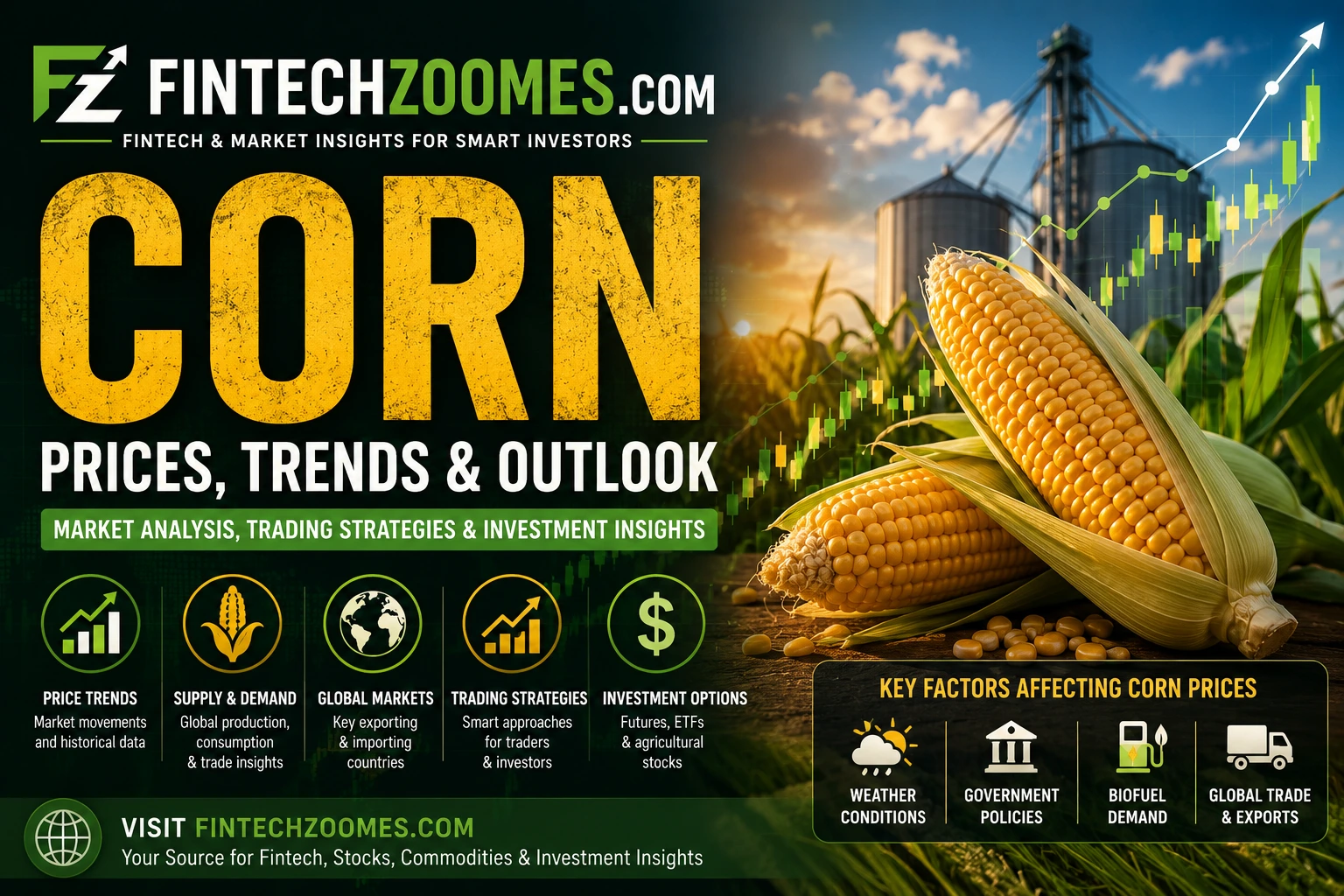
The global corn market is far more complex than a simple story about crop prices rising or falling. This essential grain feeds people and livestock, supplies raw material for ethanol and industrial products, and moves through an international trading network shaped by weather, acreage, transportation, currency markets, government policy, and consumer demand.
For farmers, traders, investors, food manufacturers, and businesses exposed to agricultural commodities, understanding these forces can make market movements easier to interpret. A strong harvest in one major producing region can change global supply expectations, while drought, export restrictions, or a sudden increase in biofuel demand can quickly alter the outlook.
This guide explains how the market works, what drives prices, where production is concentrated, how traders analyze opportunities, and which risks deserve attention.
Why This Grain Matters to the Global Economy
Maize has been cultivated for thousands of years and has evolved from a staple crop in the Americas into one of the world’s most commercially important agricultural commodities.
Its importance comes from versatility. The grain can be consumed directly, processed into food ingredients, fed to animals, converted into fuel, or transformed into materials used by manufacturers.
Major applications include:
- Human food: Cornmeal, tortillas, cereals, snacks, sweeteners, starches, and cooking ingredients.
- Animal feed: A major energy source for cattle, poultry, and hogs.
- Ethanol: Grain-based fuel production creates a substantial source of industrial demand.
- Industrial products: Starch and other derivatives are used in manufacturing, packaging, adhesives, and other applications.
- Export markets: Large producing nations ship substantial volumes to countries where domestic production cannot meet consumption.
This diversity gives the agricultural commodity a broad demand base. At the same time, it creates competing sources of demand. A larger ethanol industry, for example, can affect how much grain remains available for feed or exports.
That interaction is one reason agricultural markets can respond quickly to changing economic conditions.
How the Global Supply Chain Works
The journey from seed to end user involves several interconnected stages.
Farmers first decide how much acreage to plant based on expected profitability, weather conditions, input costs, soil conditions, and alternatives such as soybeans or wheat. Once planted, the crop remains exposed to weather risks throughout the growing season.
After harvesting, grain may be stored on farms or in commercial facilities. From there, it can move by truck, rail, barge, or ocean freight to processors, livestock operations, ethanol plants, feed manufacturers, or overseas buyers.
The basic supply chain looks like this:
Seed and inputs → farming → harvesting → storage → transportation → processing or export → end users
Each stage can influence the final market price.
For example, a bumper harvest may increase available inventories, but poor transportation infrastructure could prevent that supply from reaching buyers efficiently. Similarly, a crop failure in a major exporting country can tighten international supplies even when other producers have adequate inventories.
Understanding this chain gives traders a better framework for interpreting price movements than looking at charts alone.
The Countries That Shape Global Supply
Production is concentrated among several major agricultural powers, although many other countries contribute to the global market.
The United States has historically been one of the world’s dominant producers and exporters. Its enormous agricultural infrastructure means changes in U.S. acreage, yields, inventories, exports, and ethanol consumption can influence international prices.
Brazil has also become an increasingly important supplier. Its ability to produce substantial volumes across different growing seasons gives international buyers another major source of supply.
China is a major producer and consumer. Because domestic consumption is enormous, changes in Chinese feed demand, livestock production, inventories, or imports can affect the broader balance.
Other significant participants include Argentina, Ukraine, the European Union, Mexico, and several countries across Asia and South America.
Rather than focusing only on production rankings, market participants should watch export availability. A country can produce a large quantity but still have limited influence on international trade if most of its crop is consumed domestically.
What Really Moves Corn Prices?
Prices respond to expectations as much as they respond to confirmed production figures.
Several variables deserve close attention.
Weather and Crop Conditions
Weather is one of the most powerful short-term influences.
During planting, traders watch soil moisture and temperature. During the growing season, attention shifts toward rainfall, heat, drought conditions, and crop development.
Extreme weather can affect yields significantly. A period of excessive heat during critical stages of plant development, for example, can reduce production potential.
Weather markets can become highly volatile because traders are constantly updating forecasts. A change in expected rainfall can influence prices even before farmers know the final harvest outcome.
Planted Acreage
Farmers make planting decisions partly according to expected returns.
If maize prices are attractive relative to competing crops, farmers may allocate more acreage to it. If another crop offers better economics, acreage can shift.
This creates an important feedback mechanism. High prices can encourage additional production, while low prices may eventually discourage planting.
Yield Expectations
Acreage alone does not determine the size of the harvest.
Yield per acre can vary considerably because of weather, soil conditions, seed technology, farming practices, and disease pressure. Consequently, traders monitor crop-condition reports and production estimates throughout the growing season.
Feed Demand
Livestock producers represent a major source of demand.
The profitability of raising cattle, hogs, and poultry affects feed consumption. When livestock production expands, demand for feed grains can strengthen. When margins deteriorate or herds shrink, demand may weaken.
Ethanol Production
Biofuel policy adds another layer to the market.
In the United States, ethanol production consumes substantial quantities of maize. Changes in gasoline consumption, blending requirements, energy prices, refinery economics, and renewable-fuel policy can therefore influence demand.
The relationship works in both directions. Higher fuel demand can support ethanol consumption, while weak energy markets can change the economics of producing biofuel.
Exports and Global Trade
International buyers can dramatically change the balance between available supply and demand.
Export sales, shipping costs, currency movements, trade agreements, tariffs, and geopolitical disruptions can all influence international flows.
A weaker domestic currency in a major exporting country may make its grain more competitive abroad, potentially affecting global market share.
Understanding Futures Prices
One of the most common ways professional market participants gain exposure to agricultural commodities is through futures contracts.
A futures contract is an agreement tied to the purchase or sale of a specified quantity of a commodity at a predetermined price and future date.
Futures markets help several groups manage uncertainty.
Farmers can use them to hedge against falling prices. Commercial buyers can use them to manage the risk of rising input costs. Speculators may trade contracts based on expectations about future supply and demand.
However, futures are not simply another version of buying shares.
They involve leverage, margin requirements, contract expiration, and potentially rapid losses. A relatively small movement in the underlying commodity can create a much larger percentage change in the trader’s account.
Anyone considering futures should understand contract specifications, margin mechanics, position sizing, and settlement procedures before placing a trade.
Corn ETFs and Other Investment Routes
Investors who want agricultural exposure without directly managing futures positions have several alternatives.
Exchange-traded funds and exchange-traded products can provide exposure to commodity futures or related agricultural businesses. However, investors should examine exactly what an individual fund owns.
A fund linked to futures contracts may behave differently from the physical spot market because of contract rolls and the shape of the futures curve.
Another approach is investing in companies connected to agriculture, such as:
- Seed and agricultural technology companies
- Fertilizer manufacturers
- Farm-equipment producers
- Grain handlers
- Food processors
- Agricultural logistics businesses
These companies may benefit from strong agricultural activity but are not pure plays on grain prices. Their performance can also depend on operating costs, debt, management decisions, broader equity-market conditions, and other commodities.
| Exposure Method | Main Benefit | Key Risk |
|---|---|---|
| Futures | Direct commodity-market exposure | Leverage and margin risk |
| Commodity-linked ETF | Convenient market access | Tracking and roll effects |
| Agricultural stocks | Exposure to farming ecosystem | Company-specific factors |
| Grain-related businesses | Participation in supply chain | Less direct price exposure |
| Physical grain | Direct ownership of the commodity | Storage, transport, and quality costs |
The appropriate vehicle depends on the investor’s objectives and risk tolerance.
Corn Market Analysis: Fundamental vs. Technical Signals
Professional analysis generally combines multiple sources of information rather than relying on one indicator.
Fundamental Analysis
Fundamental analysis focuses on the physical market.
Important data points include:
- Planted acreage
- Crop yields
- Beginning and ending inventories
- Export demand
- Feed consumption
- Ethanol usage
- Weather forecasts
- Global production
- Import requirements
- Currency movements
Government agricultural reports can be especially important because they provide estimates that influence market expectations.
The key question is often not simply “Is production high?” but “Is production higher or lower than traders expected?”
Markets frequently react to the difference between expectations and reality.
Technical Analysis
Technical traders study price charts, volume, momentum, support and resistance levels, moving averages, and other indicators.
Technical analysis can help identify market structure and potential entry or exit points, but it does not explain why supply or demand has changed.
A stronger process uses technical signals alongside fundamental information.
For instance, a trader might identify a bullish chart pattern but check weather forecasts, export activity, and inventory estimates before taking a position.
Sentiment and Positioning
Market sentiment can amplify price movements.
When a large number of traders become positioned for higher prices, a bearish surprise can trigger rapid selling. The reverse can happen when the market becomes heavily bearish and unexpected bullish news arrives.
Positioning data can therefore provide useful context, particularly around major crop reports and weather developments.
Seasonal Patterns Worth Watching
Agricultural markets have a natural seasonal rhythm because production follows the growing cycle.
The market often becomes especially sensitive to weather during planting and crop development. Later, attention shifts toward harvest expectations, storage, exports, and demand.
Seasonality does not guarantee a particular price direction. Instead, it tells traders when certain information is likely to become more influential.
For example, weather forecasts may receive greater attention during the growing season, while harvest reports and inventory data may become more important later.
Seasonal analysis works best as a supporting tool rather than a standalone trading system.
The Main Risks for Traders and Investors
Agricultural commodities can offer opportunities, but they can also move sharply in response to events that are difficult to predict.
Weather Risk
A single drought, flood, heatwave, or unexpected freeze can change production expectations quickly.
Policy Risk
Subsidies, biofuel mandates, tariffs, export restrictions, and agricultural regulations can influence supply and demand.
Currency Risk
Because international trade is often conducted across currencies, exchange-rate movements can change the competitiveness of exporters.
Transportation Risk
Rail disruptions, port congestion, fuel costs, river conditions, and geopolitical events can affect the movement of grain.
Leverage Risk
Futures can magnify gains and losses. Poor position sizing can turn a modest market move into a substantial account loss.
Correlation Risk
Agricultural commodities can react to broader economic conditions, energy prices, fertilizer costs, and currency markets. A portfolio that appears diversified may still contain hidden exposure to the same macroeconomic factors.
A Smarter Way to Evaluate the Market
Instead of trying to predict every price movement, investors can build a repeatable research process.
1. Start with supply.
Review acreage, expected yields, inventories, and production forecasts.
2. Examine demand.
Track livestock consumption, ethanol production, exports, and industrial use.
3. Check weather.
Focus on regions that matter most to current production and monitor changes rather than one isolated forecast.
4. Study global competition.
Compare major exporters and consider currency and transportation advantages.
5. Watch market expectations.
Determine what traders already expect before interpreting a new report as bullish or bearish.
6. Choose the appropriate instrument.
A long-term investor may prefer diversified agricultural exposure, while an experienced hedger may have a reason to use futures.
7. Define risk before entering.
Know how much capital can be lost and establish position limits accordingly.
This process can reduce emotional decision-making and make market research more consistent.
What the Future Could Mean for the Market
Long-term demand is likely to remain connected to food consumption, animal agriculture, fuel production, and industrial applications.
Population growth and changing diets can influence feed requirements. Biofuel policies can alter industrial demand, while improvements in farming technology may increase productivity.
Climate change introduces greater uncertainty. More extreme weather patterns could increase production volatility in some regions, while advances in crop genetics, irrigation, precision agriculture, and farm management may help producers adapt.
Technology may therefore have two opposing effects: it can improve yields and resource efficiency while climate-related disruptions can make production less predictable.
The future market will depend on how these forces interact rather than on one simple demand-growth story.
Practical Tips for New Market Participants
New investors and traders can make several avoidable mistakes when entering agricultural markets.
First, do not assume that a shortage automatically means prices will keep climbing. Farmers respond to incentives, and high prices can encourage additional planting.
Second, avoid trading solely on headlines. A news report may sound bullish while the underlying market has already priced in the information.
Third, understand the difference between the physical commodity, futures contracts, ETFs, and agricultural equities. Their returns can differ significantly.
Finally, keep position sizes reasonable. Commodity markets can move quickly, particularly when weather or government reports surprise expectations.
A useful checklist before making a decision is:
- What is driving the market today?
- Is the move based on supply, demand, policy, or sentiment?
- What does the market already expect?
- What event could invalidate the current thesis?
- How much capital is at risk?
- Is the investment horizon appropriate for the chosen instrument?
These questions are simple, but they can prevent impulsive decisions.
FAQs
What makes Corn prices rise or fall?
Corn prices primarily respond to changes in expected supply and demand. Weather, crop yields, planted acreage, livestock feed requirements, ethanol production, exports, inventories, and government policy can all affect the market. Prices can also move because of currency fluctuations and trader positioning. The biggest moves often occur when new information differs substantially from what market participants had already expected.
Is investing in agricultural commodities risky?
Yes. Agricultural commodities can be highly volatile because production depends on weather and biological conditions that cannot be controlled completely. Futures add another layer of risk through leverage and margin requirements. Commodity-linked funds and agricultural stocks can also decline substantially. Investors should understand the specific investment vehicle and avoid taking more exposure than their financial situation and risk tolerance can support.
What is the difference between spot and futures prices?
A spot price represents the current market value for immediate delivery, while a futures price relates to a contract for delivery or settlement at a later date. Futures prices incorporate expectations about future supply, demand, storage, financing, and other factors. As a result, futures prices can differ from current physical-market prices and may behave differently over time.
How does weather affect the maize market?
Weather influences planting conditions, crop development, harvest size, and final yields. Drought and excessive heat can reduce production potential, while favorable growing conditions can improve yields. Because traders constantly update their expectations using weather forecasts, prices can respond before actual production figures are available. Weather is especially influential during periods when crops are most vulnerable to environmental stress.
Can beginners trade agricultural futures?
Beginners can learn futures markets, but they should approach them carefully because leverage can magnify both gains and losses. Understanding contract size, expiration, margin requirements, tick values, and risk controls is essential. Paper trading or studying historical scenarios can help develop familiarity before risking capital. A diversified investment vehicle may be more appropriate for someone seeking long-term exposure without actively trading futures.
What industries depend heavily on maize?
Several industries rely on maize or its derivatives. Livestock producers use it extensively for animal feed, while ethanol plants use it as a feedstock for biofuel production. Food manufacturers use starches, sweeteners, meal, and other processed ingredients. Industrial manufacturers also use maize-derived materials in various products. This broad demand base helps make the commodity strategically important across food, agriculture, energy, and manufacturing.
Why do government policies affect agricultural prices?
Government decisions can change production incentives, trade flows, and consumption patterns. Examples include biofuel requirements, farm-support programs, tariffs, import quotas, export restrictions, and environmental regulations. A policy change can therefore alter expected supply or demand even when weather and farming conditions remain unchanged. Traders often monitor policy developments because their effects can extend across domestic and international markets.
Final Thoughts
The global agricultural market rewards preparation rather than simple predictions. Production estimates, weather, inventories, livestock demand, ethanol consumption, exports, transportation, and government policy can all shift the balance between supply and demand.
For anyone researching Corn as an investment or trading opportunity, the strongest approach is to understand the underlying market first and choose an investment vehicle that matches the intended time horizon and risk level.
There will always be bullish and bearish arguments. The more valuable skill is knowing which information matters, what the market has already priced in, and how much uncertainty you are willing to accept. That discipline can be more useful than trying to forecast every short-term price move.
Posts on FintechZoomes.com:
FintechZoom.com Platinum: Price Trends, Uses, Investment Insights and Market Outlook
FintechZoom.com Commodities: Complete Guide to Commodity Markets Prices and Trends