FintechZoom.com Silver Price: A Complete Guide
Silver has become one of the most closely watched precious metals in global markets. Investors track the FintechZoom.com silver price to understand market direction evaluate potential opportunities and follow important developments that may influence silver valuations. Unlike gold silver has a unique position because it is both a precious metal and an important industrial commodity.
Silver is used in electronics solar technology automotive components medical equipment jewelry and several other industries. This combination gives silver a different market profile from traditional safe-haven assets.
As of August 26 2026 silver remains highly volatile after a major rally earlier in the year. Reuters reported spot silver at about $68.48 per troy ounce on August 26. Recent market data shows that silver has experienced substantial price swings throughout 2026. That makes reliable price information and careful market analysis especially important for investors.
What Is the FintechZoom.com Silver Price?
The term FintechZoom.com silver price generally refers to silver price information market analysis and financial commentary associated with FintechZoom. Investors searching for this term are usually looking for current silver prices historical performance market trends forecasts and explanations of the factors affecting silver.
Silver is normally quoted in U.S. dollars per troy ounce in international markets. One troy ounce equals approximately 31.1 grams. The international spot price represents the value of silver for near-term settlement in the wholesale market.
Retail silver prices can be different from the quoted spot price. Physical silver products may include dealer premiums manufacturing costs transportation expenses taxes and other charges. Investors should therefore distinguish between the spot price and the final price they pay for coins bars or other physical products.
Current Silver Price Outlook in 2026
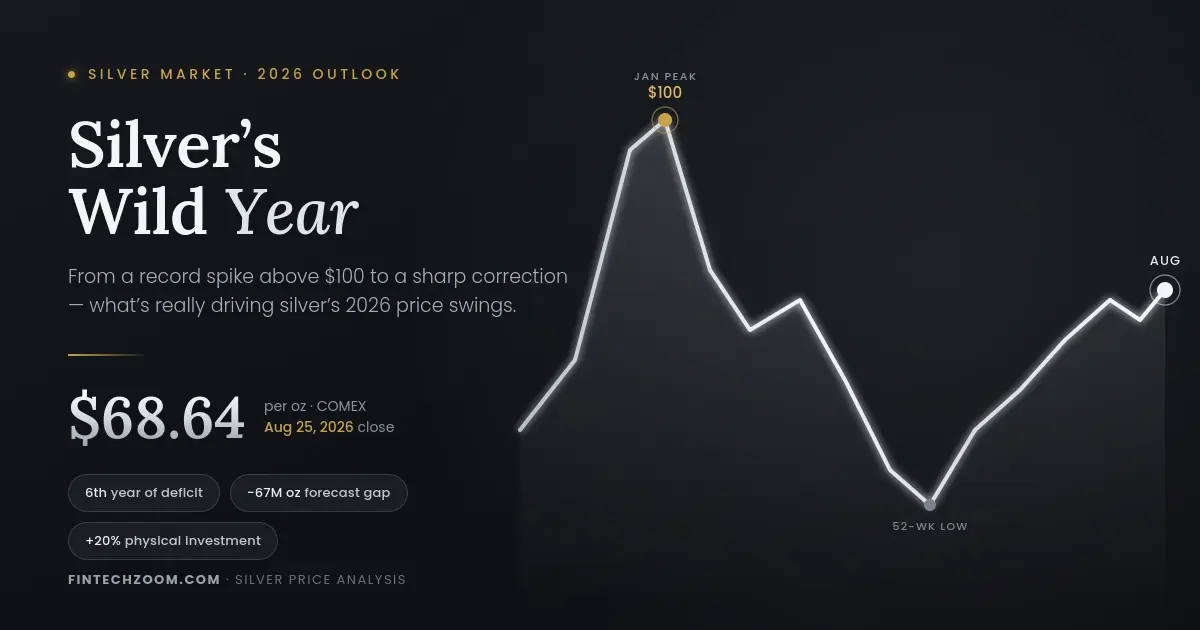
Silver has experienced a highly active market in 2026. The Silver Institute reported that silver broke through the psychologically important $100 level during January before falling below $80. The market later established support as investors continued to monitor supply conditions geopolitical developments and monetary policy.
By August silver was trading considerably below its January peak. On August 25 COMEX silver settled around $68.64 per ounce. It had recovered strongly from its 52-week low while remaining well below its January record.
This price action demonstrates an important characteristic of silver. The metal can produce significant gains during strong market cycles. It can also experience sharp corrections when traders take profits or macroeconomic conditions change.
Anyone following the FintechZoom.com silver price should therefore avoid judging the market from a single daily price. A better approach is to examine the broader trend while considering supply demand interest rates currency movements industrial consumption and investor sentiment.
Why Is Silver Price Important?
Silver plays two major roles in the global economy.
First it is an investment asset. Investors can use silver as part of a diversified portfolio. Physical silver coins and bars are popular among some investors who want direct exposure to precious metals.
Second silver is an industrial material. Its electrical conductivity makes it valuable in electronics and electrical applications. It is also used in solar technology automotive systems and other advanced technologies.
This industrial connection can create additional demand when manufacturing activity expands. At the same time economic weakness can reduce industrial consumption.
The Silver Institute reported that industrial silver demand reached 657.4 million ounces in 2025. That represented a 3% decline from the previous year. The decline was linked partly to lower photovoltaic demand although growth in areas such as artificial intelligence infrastructure automotive applications and power grids provided support.
Key Factors That Influence Silver Prices
1. Supply and Demand
Supply and demand are fundamental drivers of the silver market.
When demand grows faster than available supply prices can face upward pressure. When production increases while demand weakens prices can come under pressure.
The Silver Institute expects the global silver market to remain in deficit for a sixth consecutive year in 2026. Its February outlook projected a deficit of approximately 67 million ounces.
A market deficit does not guarantee higher prices. Investor positioning and broader financial conditions can have a powerful short-term impact. Persistent supply shortages can however become an important long-term factor.
2. Industrial Demand
Industrial consumption is one of the biggest differences between silver and gold.
Silver is required in numerous electronic and electrical applications. It also has an important role in solar technology. Demand from artificial intelligence infrastructure automotive systems and electricity networks may provide long-term support.
There is an important complication. Solar manufacturers have been reducing the amount of silver used in some photovoltaic technologies. The Silver Institute expects photovoltaic demand weakness to weigh on industrial silver consumption during 2026.
This means investors should look beyond headlines about rising solar installations. More solar panels do not automatically translate into proportional growth in silver demand.
3. Interest Rates
Interest rates can influence precious metals through several channels.
When interest rates rise investors may find interest-bearing assets more attractive. Higher rates can therefore create pressure on precious metals.
When markets expect lower rates the opportunity cost of holding a non-yielding asset such as silver can decrease. This can support investor demand.
Expectations about Federal Reserve policy are particularly important because silver is primarily priced in U.S. dollars.
4. U.S. Dollar Strength
Silver is traded internationally in U.S. dollars. Changes in the dollar can influence the metal’s global purchasing cost.
A stronger dollar can make silver more expensive for buyers using other currencies. A weaker dollar can make dollar-denominated commodities more attractive to international buyers.
Recent precious metals trading has shown how closely currency movements can interact with silver. Reuters reported that a weaker dollar and changing expectations around U.S. monetary policy have recently influenced precious metals markets.
5. Inflation and Economic Uncertainty
Silver is often viewed as a potential hedge during periods of inflation or economic uncertainty. Investors may increase exposure to precious metals when they are concerned about purchasing power financial instability or geopolitical risks.
However silver is not a guaranteed inflation hedge. Its industrial role means that economic conditions can sometimes affect silver differently from gold.
This dual identity makes silver both interesting and challenging for investors.
Silver Compared With Gold
Gold and silver are both precious metals but their markets behave differently.
Gold has a much larger investment and central-bank role. Silver has a much stronger industrial component. This can make silver more sensitive to manufacturing trends and economic cycles.
Silver can also show larger percentage movements than gold. During bullish periods this can create significant upside potential. During corrections the same characteristic can increase downside risk.
The gold-to-silver ratio is another indicator watched by precious metals investors. It measures how many ounces of silver are required to purchase one ounce of gold. Investors sometimes use changes in this ratio to compare relative valuations between the two metals.
Is Silver a Good Investment in 2026?
There is no universal answer because suitability depends on an investor’s objectives risk tolerance time horizon and portfolio structure.
The fundamental picture contains both positive and negative factors.
On the positive side the Silver Institute expects physical investment to rise by about 20% in 2026 to approximately 227 million ounces. The organization also expects the market to remain in deficit.
On the negative side industrial demand is expected to decline during 2026. High prices can also reduce jewelry and silverware demand. The Silver Institute projects jewelry demand to fall by more than 9% while silverware demand is expected to decline by about 17%.
These figures show why investors should avoid relying on a single bullish or bearish argument.
How to Track the FintechZoom.com Silver Price
Investors researching the FintechZoom.com silver price should monitor several data points rather than looking only at the latest quoted price.
Important indicators include:
- Spot silver price
- COMEX silver futures
- U.S. dollar movements
- Federal Reserve interest rate expectations
- Inflation data
- Industrial production
- Solar industry demand
- Global mine production
- Silver recycling
- Physical investment demand
- Gold-to-silver ratio
- Geopolitical developments
Historical charts can also help investors identify major support and resistance zones. However technical indicators should be treated as analytical tools rather than guaranteed predictors.
Silver Price Forecast: What Could Happen Next?
Silver’s future direction will depend on the interaction between investment demand industrial consumption supply availability and global economic conditions.
A stronger investment cycle could support prices if investors continue moving toward precious metals. A sustained market deficit could also provide fundamental support.
Conversely weaker industrial activity higher interest rates or a stronger U.S. dollar could create headwinds. Rapid technological changes in solar manufacturing could also reduce the amount of silver required per unit of production.
The Silver Institute expects total silver supply to increase by about 1.5% in 2026. Mine production is forecast to rise by approximately 1% while recycling is expected to increase by about 7%. Even with those gains the market is projected to remain in deficit.
For this reason a balanced silver outlook should recognize both the potential for further gains and the possibility of substantial volatility.
Tips for Investors Following Silver Prices
Investors should consider several principles when researching silver.
Check reliable market data. Silver prices can change quickly. Always verify the latest spot or futures price before making financial decisions.
Understand the difference between spot and physical prices. A silver coin may cost more than the underlying metal value because of dealer premiums and production costs.
Avoid chasing sudden price spikes. Silver can move rapidly after major news. Buying during emotional market conditions can increase risk.
Consider diversification. Precious metals can play a role in a broader investment strategy but concentration in one asset can increase portfolio risk.
Study supply and demand. Industrial trends can be just as important as investor sentiment when analyzing silver.
Think long term. Daily price movements can be noisy. A long-term investor may benefit from focusing on structural market trends rather than every short-term fluctuation.
Final Thoughts
The FintechZoom.com silver price is an important search topic for investors who want to understand silver’s changing market value. Silver is more than a traditional precious metal. Its industrial applications give it exposure to technology manufacturing energy infrastructure and economic growth.
The 2026 market illustrates the metal’s volatility. Silver reached extraordinary levels earlier in the year before experiencing a significant correction. By August the market was trading near the high-$60 range while investors continued watching interest rates currency movements geopolitical developments and supply conditions.
The strongest approach is not to focus exclusively on whether silver will rise or fall. Investors should understand why the price is moving. Supply deficits physical investment industrial demand monetary policy and market sentiment can all influence the next major move.
Silver may continue to attract attention as both an investment asset and an essential industrial material. Yet its volatility means careful research remains essential. Reliable price data combined with fundamental analysis can help investors make more informed decisions while avoiding unrealistic expectations.