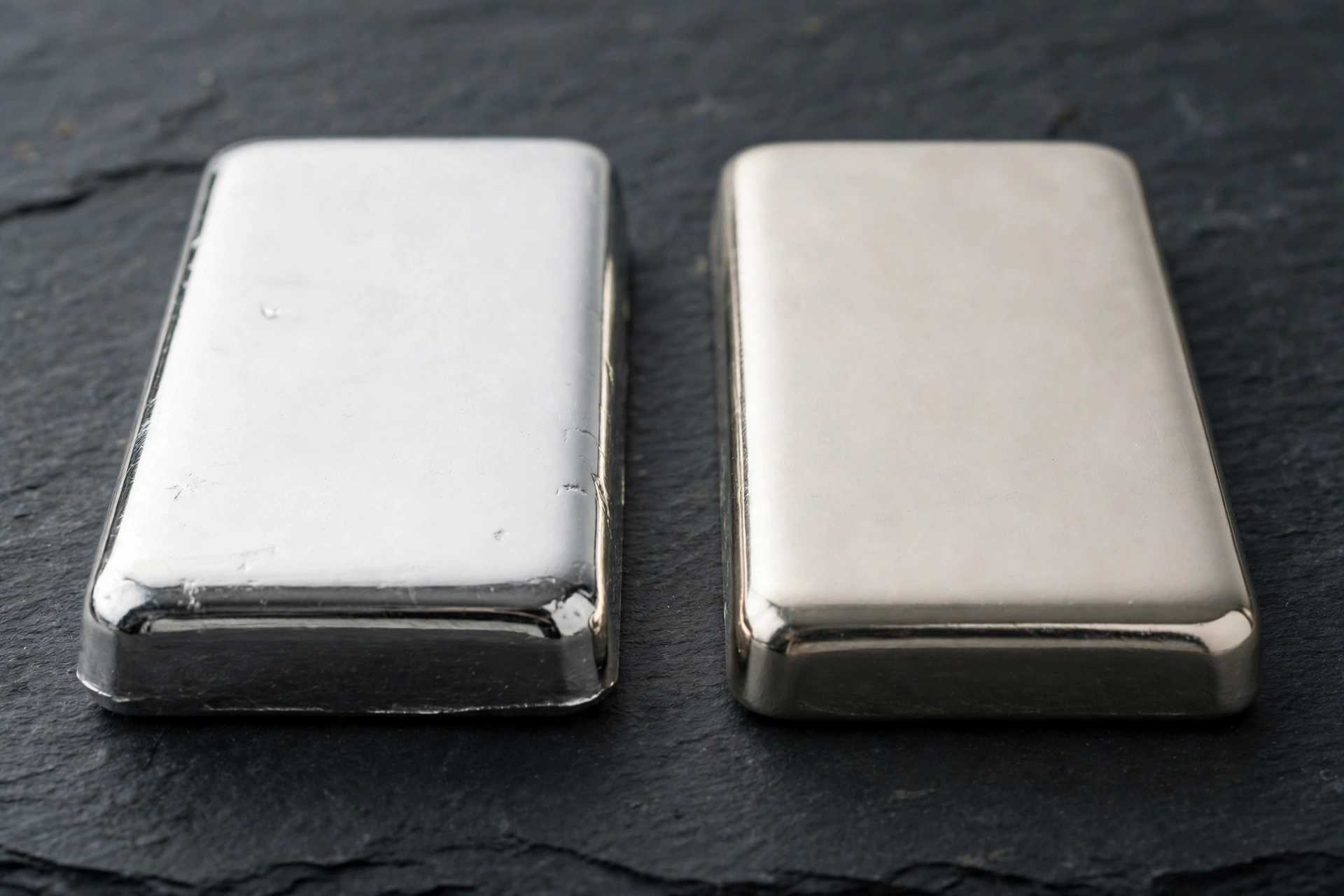
Platinum vs Palladium Investment: Which Metal Is Better for Investors?
Platinum and palladium are close cousins. Both are silvery-white precious metals from the same mines, and both spend most of their working lives inside a car’s exhaust system. Palladium rose above $3,400 an ounce, then lost about three-quarters of its value in under two years. Platinum spent fifteen years below its 2008 peak, set a new record in January 2026, then fell sharply within months. Which one deserves a place in a portfolio? It depends on your view of petrol and diesel cars, and how much volatility you can accept.
What Are Platinum and Palladium?
Platinum and palladium belong to the platinum-group metals, six rare metals usually mined together. They can substitute for each other in some industrial jobs, which matters for prices: when one metal gets expensive, car makers use more of the cheaper one. The key difference is demand. Palladium depends on one industry more than almost any other major commodity. Platinum is spread across several industries.
What Each Metal Is Used For
More than 80% of palladium demand comes from catalytic converters in petrol cars, including hybrids. When petrol car production is strong, palladium demand is strong. When it weakens, palladium has very little else to fall back on.
Platinum’s demand is spread much wider. It is used in catalytic converters too, mainly for diesel engines, and car makers have also been substituting platinum for palladium in petrol catalysts. Beyond cars, platinum goes into jewellery, chemicals, glass, petroleum refining, medical equipment, and hydrogen fuel cells and electrolysers. In short, palladium is a concentrated bet on petrol cars, while platinum is a broader bet on industry, jewellery and possibly hydrogen. Neither is a safe haven like gold.
Where Supply Comes From — and Why It Matters
According to the US Geological Survey, South Africa produced about 70% of the world’s mined platinum in 2024, and about 120 of the roughly 170 tonnes mined worldwide in 2025. Palladium supply is split differently: Russia is the largest producer — its mining company Nornickel alone accounts for about 40% of world palladium output — and South Africa is second. The USGS puts 2025 world palladium mine production at about 190 tonnes, with Russia at 84 tonnes and South Africa at 70 tonnes.
This concentration creates real risk. South African mines face power cuts, labour disputes and years of underinvestment, and the country’s platinum-group output fell 4.1% in 2025. Russian supply carries geopolitical risk.
Price History: Two Wild Rides
Platinum peaked at roughly $2,280–$2,300 an ounce in March 2008, then spent more than fifteen years below that level, falling to about $875 by February 2024. In late January 2026 it set a new record of about $2,900 an ounce, before falling sharply again. By early November 2026 it was trading at roughly $1,550–$1,600 an ounce.
Palladium’s ride was wilder still. On 7 March 2022 it hit a record of about $3,440 an ounce, then collapsed to about $860 in February 2024 — a loss of about 75% in under two years. In the first half of 2026 it fell 26.02%. Both metals can rise fast on a supply scare and fall just as fast when demand disappoints, so expect double-digit swings in a single year.
The 2026 Twist: Deficits Turn Into Surplus
The World Platinum Investment Council confirmed a platinum deficit of more than 1.44 million ounces in 2025. Johnson Matthey’s PGM Market Report (May 2026) put the 2025 platinum deficit at 951,000 ounces and the palladium deficit at 416,000 ounces.
Then 2026 flipped the story. In its Platinum Quarterly of 9 September 2026, the Council reversed its forecast from a 297,000-ounce deficit to a 265,000-ounce surplus for 2026 — the first surplus since 2022. The cause was investors selling: investment demand was cut by about 601,000 ounces as holders sold ETF positions. The Council still expects a deficit of about 283,000 ounces in the second half of 2026, and above-ground stocks remain thin at about 3.4 months of demand. Johnson Matthey expects a similar turn for palladium: a surplus of about 214,000 ounces in 2026 as demand falls about 9%.
How to Invest in Platinum and Palladium
There are three main ways in.
Physical metal. Bars and coins are the most direct route: you own the metal itself. The downsides are dealer premiums over the spot price, storage and insurance costs, and slower resale.
Exchange-traded funds (ETFs). For most investors this is the simplest route. The best-known physically backed funds are the abrdn Physical Platinum Shares ETF (ticker PPLT) and the abrdn Physical Palladium Shares ETF (ticker PALL), both launched in January 2010. Both hold the actual metal in vaults in London, track the spot price minus fees, and charge an annual expense ratio of 0.60%. The GraniteShares Platinum Trust (PLTM) and the Sprott Physical Platinum & Palladium Trust (SPPP) are further options. In the United States, gains on physically backed precious metal ETFs are generally taxed as collectibles, with long-term gains taxed at up to 28%.
Mining shares. Shares in platinum-group metal miners give leveraged exposure: profits can rise faster than metal prices, but so can losses, and you take on company risks such as strikes and power problems. This is the highest-risk route and suits only investors who understand mining companies.
See also our complete guide to platinum, our guide to silver prices, and our complete guide to commodity markets.
The Risks You Should Not Ignore
Four risks matter most. First, electric vehicles: battery-electric cars have no exhaust system and use no catalytic converters, so as EV sales grow, the core demand for both metals shrinks — and palladium, with more than 80% of demand in petrol cars, is more exposed than platinum. Second, substitution: car makers swap platinum for palladium when the price gap is wide, and that works both ways. Third, concentration: a power crisis, strike or sanction in South Africa or Russia can move prices sharply. Fourth, volatility: both metals fell by more than a quarter in the first half of 2026.
Which Metal Fits Which Investor?
Platinum suits an investor who wants broader demand, a possible hydrogen story, and a metal that has already corrected hard from its January 2026 record. Its uses are spread widely enough that no single industry decides its fate. Palladium suits an investor who believes petrol and hybrid car production will stay strong and wants a smaller, tighter market where a supply squeeze can move prices fast. The price for that is concentration: one industry, two main producing countries, and a history of 75% falls. Treat both as small satellite holdings, not core positions.
Platinum vs Palladium at a Glance
| Feature | Platinum | Palladium |
|---|---|---|
| Main use | Diesel catalysts, jewellery, chemicals, hydrogen | Petrol catalysts (80%+ of demand); electronics |
| Main supply | South Africa (~70%), Russia, Zimbabwe | Russia (~40%), South Africa (~35%) |
| 2025 balance | Deficit over 1.44m oz (WPIC) | Deficit: 416,000 oz (Johnson Matthey) |
| 2026 outlook | Forecast 265,000 oz surplus (WPIC, Sept 2026) | Forecast 214,000 oz surplus (Johnson Matthey) |
| Record price | About $2,900/oz, late Jan 2026 | About $3,440/oz, 7 Mar 2022 |
| Recent behaviour | Down 26.54% in H1 2026 | Down 26.02% in H1 2026; lost ~75% from its 2022 peak |
| Investment forms | Bars/coins, PPLT/PLTM ETFs, mining shares | Bars/coins, PALL ETF, mining shares |
| Key risk | EV shift, South African supply | Petrol car demand, Russian supply, thin market |
Frequently Asked Questions
Is platinum or palladium a better investment?
It depends on your view of the car market. Platinum has broader demand — diesel catalysts, jewellery, chemicals and hydrogen — so it is less exposed to any single industry. Palladium is a concentrated bet on petrol cars: it can rise fast on a supply squeeze, as it did to $3,440 an ounce in March 2022, but it also lost about 75% of its value in under two years.
Why did palladium fall so much after 2022?
Its record price was driven by tight supply and strong petrol car demand. When car production slowed, recycling recovered and electric vehicles gained share, demand fell while supply held up. Johnson Matthey expects a surplus of about 214,000 ounces in 2026, after a deficit of 416,000 ounces in 2025.
Is platinum still in deficit?
Not in 2026. The World Platinum Investment Council confirmed a deficit of more than 1.44 million ounces in 2025, but its September 2026 report now forecasts a 265,000-ounce surplus for 2026, mainly because investors sold ETF holdings.
What is the easiest way to invest in platinum or palladium?
For most investors, a physically backed ETF is the simplest route: PPLT for platinum and PALL for palladium, both launched in January 2010 with a 0.60% annual expense ratio. Physical bars and coins give direct ownership but add dealer premiums and storage costs.
Sources
- Johnson Matthey, PGM Market Report, May 2026 — https://matthey.com/documents/161599/509428/pgm-market-report-26.pdf
- World Platinum Investment Council, Platinum Quarterly Q2 2026, 9 September 2026 — https://platinuminvestment.com/files/354715/WPIC_Platinum_Quarterly_Q2_2026.pdf
- US Geological Survey, Mineral Commodity Summaries 2026: Platinum-Group Metals — https://www.usgs.gov/centers/national-minerals-information-center
- London Bullion Market Association, Q2 2026 market report (platinum and palladium price moves, via US Bullion Reserve summary) — https://www.usbullionreserve.com/articles/platinum-and-palladium-investment-for-serious-investors-which-fits-your-allocation
- Investopedia, “Discover 3 Funds to Boost Your Palladium Portfolio” (PALL, SPPP) — https://www.investopedia.com/articles/etfs/071716/top-3-etfs-exposure-palladium-pall-sppp.asp
- Kitco, platinum market reporting (South African output, WPIC forecasts) — https://www.kitco.com/
Disclaimer: This article is educational information only. It is not financial advice, and it is not a recommendation to buy or sell platinum, palladium, or any security. Precious metal prices are volatile and can fall sharply. Do your own research and consider speaking to a licensed financial adviser before investing.